
News from our partners: measles cases rise – parents urged to protect children
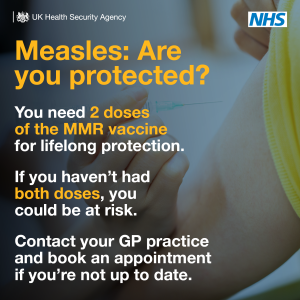
Measles are you protected?
Cases of measles are on the rise in the West Midlands area.
HM Government figures show that between 1 January 2026 and 30 March 2026, there have been 336 laboratory confirmed measles cases reported in England, an increase of 37 cases since the last report on 26 March 2026.
57% (191/336) of these cases have been in London, 24% (80/336) in the West Midlands, and 7% (24/336) in the North West. However, all regions have reported at least one confirmed case with symptom onset since January 2026.
Measles usually starts with cold-like symptoms. The first symptoms of measles include:
- a high temperature
- a runny or blocked nose
- sneezing
- a cough
- red, sore, watery eyes
A rash usually appears a few days after the cold-like symptoms. The rash starts on the face and behind the ears before spreading to the rest of the body.
Some people may also get small spots in their mouth, particularly inside the cheeks and on the back of the lips. You can learn more about symptoms on the NHS website’s measles information page.
Measles is a very infectious disease that spreads easily and can lead to serious health complications, especially in children under 1, pregnant women, and people with a weakened immune system. Outbreaks can happen when not enough people have been immunised.
If you suspect measles
- Ask for an urgent GP appointment or contact NHS 111. Call ahead before attending so arrangements can be made to prevent spreading infection.
- Avoid nursery, school, work, or group activities for at least four days after the rash appears or until you’ve spoken to your doctor.
Measles spreads through coughing and sneezing and can remain in the air or on surfaces for up to two hours. Regular handwashing, good ventilation and avoiding sharing items such as cups, towels or bedding can help reduce the spread.
For information about the MMRV vaccine, visit: https://www.nhs.uk/vaccinations/mmrv-vaccine/ or Vaccinations – NHS Shropshire, Telford and Wrekin
For information about measles, including symptoms and actions to take if you suspect your child is unwell, please visit: https://www.nhs.uk/conditions/measles/