
County-wide bird survey proves value of digital technology in rural industries
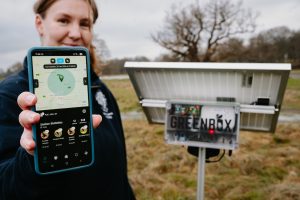 A new acoustic bird survey supported by the River Severn Partnership Advanced Wireless Innovation Region (RSPAWIR) has shown how advanced wireless technology can be used to monitor birdlife more effectively.
The Green Box project is one of a number of initiatives supported by the £4.4 million RSPAWIR programme, which is funded by the Department for Science, Innovation and Technology and managed by Shropshire Council.
The programme focuses on demonstrating how advanced wireless connectivity can deliver environmental, social and economic benefits across water management, rural industries and the public sector.
The survey, developed by Harper Adams University, forms part of the Green Box project, which uses small, low‑impact acoustic sensors to listen for birdsong across farms and a range of habitats. Using artificial intelligence, the sensors can identify different bird species automatically, with the information displayed on an open‑access dashboard for researchers and partners.
By capturing data continuously, in real time and in remote environments without the need for regular site visits, the Green Box survey shows how wireless monitoring can help build a clearer picture of how both red and amber listed species are using the landscape, supporting better‑informed land management and conservation decisions.
Dr Joseph Mhango, senior lecturer in applied data science at Harper Adams University, said:-
“What this work shows is that wireless technology can give us a much richer, longer‑term understanding of bird activity across different habitats. The consistency of the data we’re collecting means it has real potential to support conservation planning and help us track species of concern more effectively over time.”
Rob Wilson, Shropshire Council’s Cabinet member with responsibility for digital, said:-
“This project shows how digital innovation can be applied in a very practical way to support the natural environment. Through RSPAWIR, we are testing technology that can improve the evidence we use to make decisions, support biodiversity planning and help protect vulnerable species across Shropshire and the wider Severn catchment.”
The findings from the acoustic bird survey will be shared at a free to attend event at Shropshire Wildlife Trust’s offices in Shrewsbury from 6pm on Tuesday, March 24, where people will hear more about how the technology works, what the survey has demonstrated so far, and how it could support future nature recovery and biodiversity.
Click here to register for the free to attend event.