
Warning to be alert after bird flu found in wild birds
Shropshire Council is urging residents and businesses who keep birds to remain alert for any signs of disease and report any cases of suspected disease immediately. It follows positive results of avian influenza (bird flu) in the Shropshire wild bird population during a routine survey.
Three cases of H5N1 High Pathogenicity Avian Influenza Virus were found in waterfowl in Tasley, Shropshire, following one case which was confirmed in Ellesmere in November 2025, three in Quatford, and three near Wem in December 2025.
There have been no cases of Avian Influenza in Shropshire confirmed in domestic birds this season, and all wild cases have been in waterfowl.
The public are encouraged to report sightings of certain wild bird deaths so that they may be collected for analysis in the APHA avian disease investigation laboratories. An online reporting tool is available to use 24/7 and accessible on mobile phones, tablets and laptops. If they fit the criteria of the survey, some of these may be collected for testing though not all dead birds will be required or collected.
The tool does not replace the Defra helpline, which will remain in place (03459 33 55 77).
Current criteria for consideration for collection:
- One or more dead bird of prey (such as an owl, hawk or buzzard)
- One or more swan, goose, duck or gull
- Five or more wild birds of any other species.
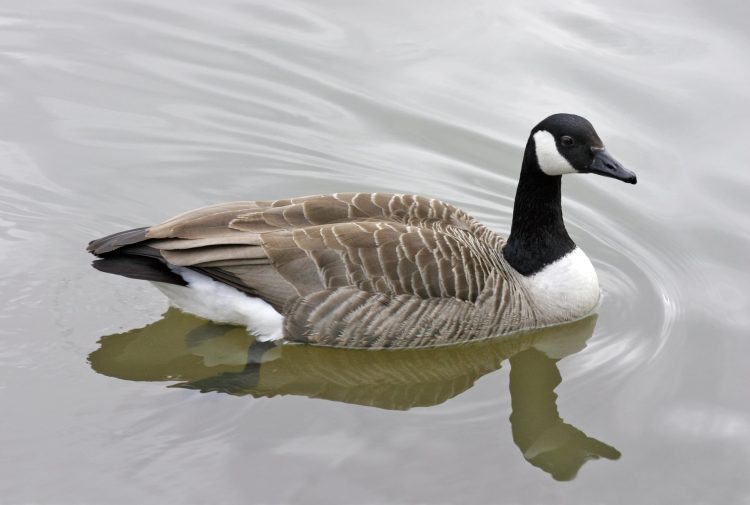
A Canada Goose
Bernie Bentick, Shropshire Council’s Cabinet member for health, expressed his concern over the situation, saying:
“This outbreak of Avian Influenza H5N1 is concerning. It is crucial that all residents and businesses involved in poultry farming adhere strictly to biosecurity measures to prevent further spread. We must act with utmost caution to protect our local poultry industry and public health.
“We also need to ensure good biosecurity in the area to prevent onwards spread, so we ask the public to be vigilant if walking in restricted areas.”
Further information
Great Britain (England, Scotland and Wales) is in an avian influenza prevention zone (AIPZ). By law you must follow strict biosecurity and hygiene rules to prevent bird flu and stop it spreading, and you may also have to house your birds.
- If you have 50 or more birds you must house them. This applies to all types of birds.
- If you keep less than 50 birds and they are for your own use only (for example you do not sell or give away their eggs or meat), you do not have to house them.
- If you keep less than 50 birds but you do sell or give away their eggs, poultry products or live birds, you must house them.
If you keep poultry, you must register as a keeper.
Flock keepers are being asked to look for any signs of diseases whilst ensuring good levels of biosecurity at their premises, and housing them if they meet the requirements.
Spot the signs of Bird Flu
- Unusual quietness decreased activity levels.
- Decreased levels of vocalisation
- Decreased levels of feed and water consumption.
- Decreased egg production.
If you are concerned about the health of your animals, please seek advice from your vet.
For more information about bird flu and biosecurity please visit the government website.
If you suspect bird flu in poultry or other captive birds, you must report it immediately by calling 03000 200 301 if you’re in England, or 03003 038 268 if you’re in Wales
To report dead wild birds, if you suspect they may have died from Avian Influenza, use this online form.
Advice for bird keepers
There is currently a requirement to ensure flocks over 50 birds are kept housed and for you to register all flocks of birds in order that information can be sent to you. Registration of flocks can be completed here
There are some simple measures poultry keepers should take to protect their birds against the threat of avian flu. These include:
- Keep free-ranging birds in fenced areas to minimise contact with wild birds, neighbouring poultry or captive birds.
- Inspect outdoor areas, removing wild bird contaminants like faeces, feathers and wild bird carcases.
- Fence off or put netting over areas of standing water or ponds.
- Provide feed and water undercover, so wild birds can’t access it.
- Make your premises unattractive to wild birds. Use bird scarers, foils or streamers.
- Keep ducks and geese separate from other poultry.
- Store bedding under cover to reduce the risk of contamination.
- Clean and disinfect footwear before and after tending to your birds. If you own more than 50 birds, place foot dips containing Government approved disinfectant at all entry and exit points.
- Clean and disinfect hard surfaces regularly.
- Clean and disinfect equipment and vehicles to avoid disease spread between premises.
- Minimise the movement of people, vehicles and equipment to and from bird areas and keep records of movements.
- Keep records of poultry, captive bird and egg movements.
- Maintain buildings that house birds to prevent water ingress
- Ensure pest control is effective.
Advice for members of the public
The UK Health Security Agency (UKHSA) advise that bird flu is primarily a disease of birds and the risk to the general public’s health is very low.
The Food Standards Agency (FSA) has said bird flu poses a very low food safety risk for UK consumers. Properly cooked poultry and poultry products, including eggs, are safe to eat.
Register as a keeper of birds
You must register within one month of keeping poultry or other captive birds at any premises in England or Wales. You’re breaking the law if you don’t register.
Register as a keeper of:
- fewer than 50 poultry or other captive birds
- 50 or more poultry or other captive birds
Registering means the Animal and Plant Health Agency (APHA) can contact you during a bird flu outbreak.